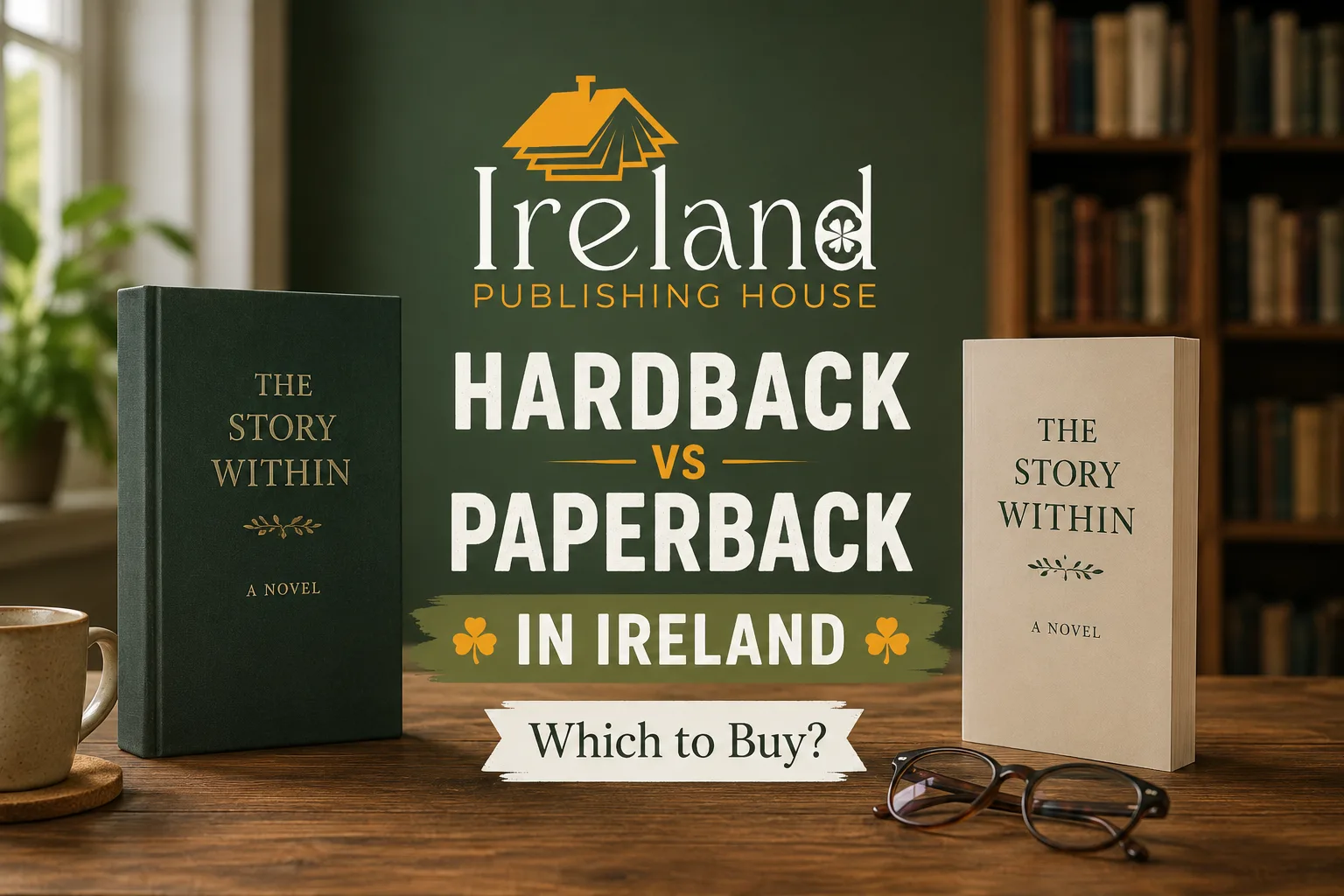
Hardcover or Paperback? Choose the Edition That Fits Your Readers

Posted on: 10-08-2026 Printing
Hardback vs Paperback in the United States

Binding is a practical decision as well as a visual one. Hardcover and paperback editions can serve different audiences, uses, and production plans. Compare the reading experience, durability, specifications, and cost of the actual options available for your book rather than assuming one format is always better.

Think about how the book will be used

A reader carrying a novel during a commute may value portability. A heavily used reference book or gift edition may call for a different physical presentation. Consider where the book will live, how often it will be handled, and whether the format supports the content.

Compare complete specifications

Paper, trim size, color, cover treatment, and binding work together. A binding label alone does not tell you how a finished book will feel. Ask the printer for the relevant options and examine samples or proofs where available. Use the same specifications when comparing estimates.

Account for the production files

Different bindings may require different cover templates or other adjustments. Page count and paper affect spine dimensions, while a change in trim size can alter the interior. Finalize the specifications before approving production artwork for each edition.

Plan the quantity and delivery route

Printing method, order size, shipping, and storage affect the practical decision. A format that suits a large event order may not be the most suitable first edition for a different release plan. Discuss the options using expected demand and your actual delivery needs.

Consider a staged format plan

You do not need to launch every edition at once. One format can establish a production baseline while another is prepared later. Keep the text, edition information, rights, and retailer records consistent as the plan grows.

Put It Into Practice

List your readers’ likely uses for the book. Rank portability, durability, visual presentation, and production cost before requesting a binding estimate.
Frequently Asked Questions

It depends entirely on how many times you'll read the book. Run the cost-per-read numbers rather than just comparing sticker prices: a €30 hardback read ten times works out cheaper per read than a €12 paperback read only twice.
Hardbacks cost more to produce: rigid boards, cloth or paper wrapping, a printed dust jacket, and a more complex sewn binding process. That production cost is passed straight through to the retail price.
Hardback, by a wide margin, assuming it's properly sewn and stored out of direct sunlight and humidity. A well-made hardback can last 50 years or more, while a heavily used paperback may start showing real wear within five.
Paperback, without much competition. It weighs roughly half what a hardback edition does and fits easily into a small bag, which matters on anything from a Chicago commute to a long-haul flight.
No. Printed books, along with e-books and audiobooks, are zero-rated for VAT in the United States, so the format you choose doesn't change the tax on the price.
Paperback generally has a smaller production footprint and is easier to recycle. A hardback's longer lifespan can offset that if it genuinely replaces several paperback purchases over the years, so the honest answer depends on how long you'll actually keep the book.
Usually not, unless it's a favourite author, a signed edition, or something you specifically want to keep pristine. For a one-time read, paperback gets you the story for less money and less shelf space.
A trade paperback is larger, often with a sturdier cover and better paper, and is what most new fiction and non-fiction releases use. A mass-market paperback is smaller, cheaper, and built for volume rather than longevity, the kind you'd pick up for an airport read.
Secondhand shops, charity shop shelves, and university book sales are the most reliable sources, and comparing prices across a few different retailers will often turn up a used hardback for less than a new paperback of the same title. Seasonal sales around Christmas and back-to-school periods are also worth watching.
Paperback, in most cases. It costs less to produce, keeps your retail price competitive against established authors, and is far less risky if you need to reprint after early feedback. A hardback edition can always follow later for readers, events, or signed copies once the book has found its audience.

Dr Amelia Grant

Dr Amelia Grant writes for InkStone Publisher on publishing strategy, manuscript craft, and the realities of bringing a book to market in the United States. Her work focuses on practical, author-first guidance you can actually use.

InkStone Publisher

Transform Your Vision
into a Published Work

Use our full publishing help to make your ideas a reality. We assist you in transforming your idea into a gorgeously published book that readers will adore, from concept to finished copy.

  • Trusted By Authors WorldWide
  • Exceptional Success Rate
  • Satisfaction Guaranteed
  • Personalized Guidance And Support
  • Get Up To 40% OFF Today
InkStone Publisher
+

Get a Free Consultation