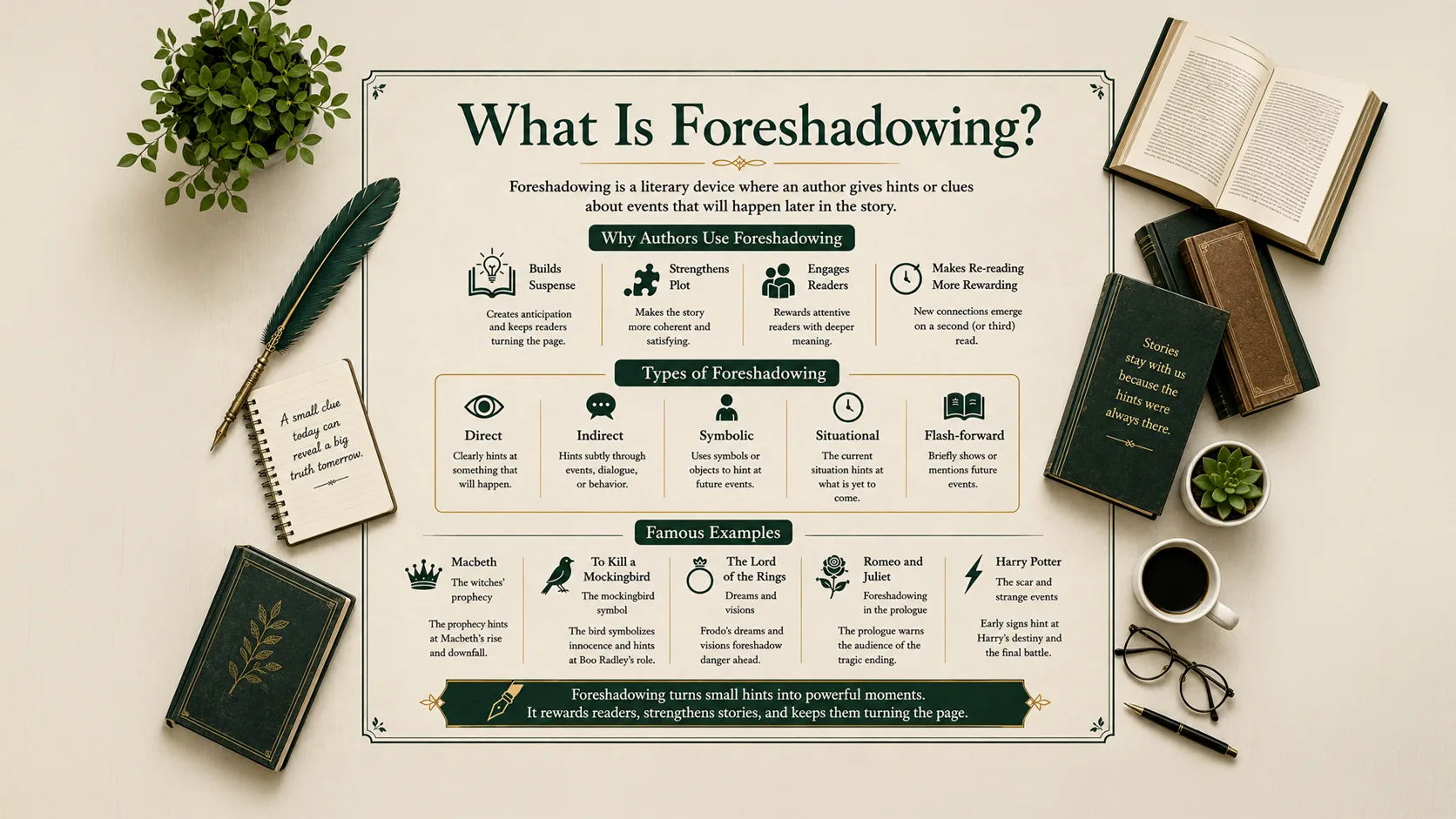
Foreshadowing introduces information that prepares readers for something later. A useful clue has a role in the present scene as well as a connection to the eventual payoff. Readers do not need to predict the exact event, but they should be able to recognize the preparation when they look back.
Begin with the later event
Identify the reveal, decision, or consequence that needs preparation. Ask what readers must already understand for it to feel plausible. A skill, limitation, object, relationship, or rule may need an earlier appearance. Plan the necessary information before deciding how noticeable the clue should be.
Give the clue an immediate purpose
An object placed on a table solely for a future twist can look suspicious. If it also affects the current conversation or action, it belongs naturally in the scene. The clue’s first role helps it feel like part of the world rather than a sign pointing toward the ending.
Use different levels of visibility
Some preparation can be explicit, such as a warning about a danger. Other preparation can be quieter, such as a repeated habit or an overlooked inconsistency. Match the degree of emphasis to the story’s tone. A mystery, comedy, and family drama may use the same technique differently.
Make the payoff relate to what was established
The later event should use the earlier information in a meaningful way. If the clue could be removed without affecting the reader’s understanding, it may be decorative rather than structural. Conversely, a payoff that introduces its crucial rule at the last moment can feel unearned.
Test both the first read and the reread
On a first read, clues should not all demand attention at once. On a reread, their relevance should become clear. Ask a test reader what they noticed, what they predicted, and what surprised them. Their response can help you adjust emphasis without explaining the twist in advance.
Put It Into Practice
Choose one payoff in your draft. Add three possible preparations: a visible warning, an ordinary detail, and a character habit. Keep the one that fits the existing scene.